

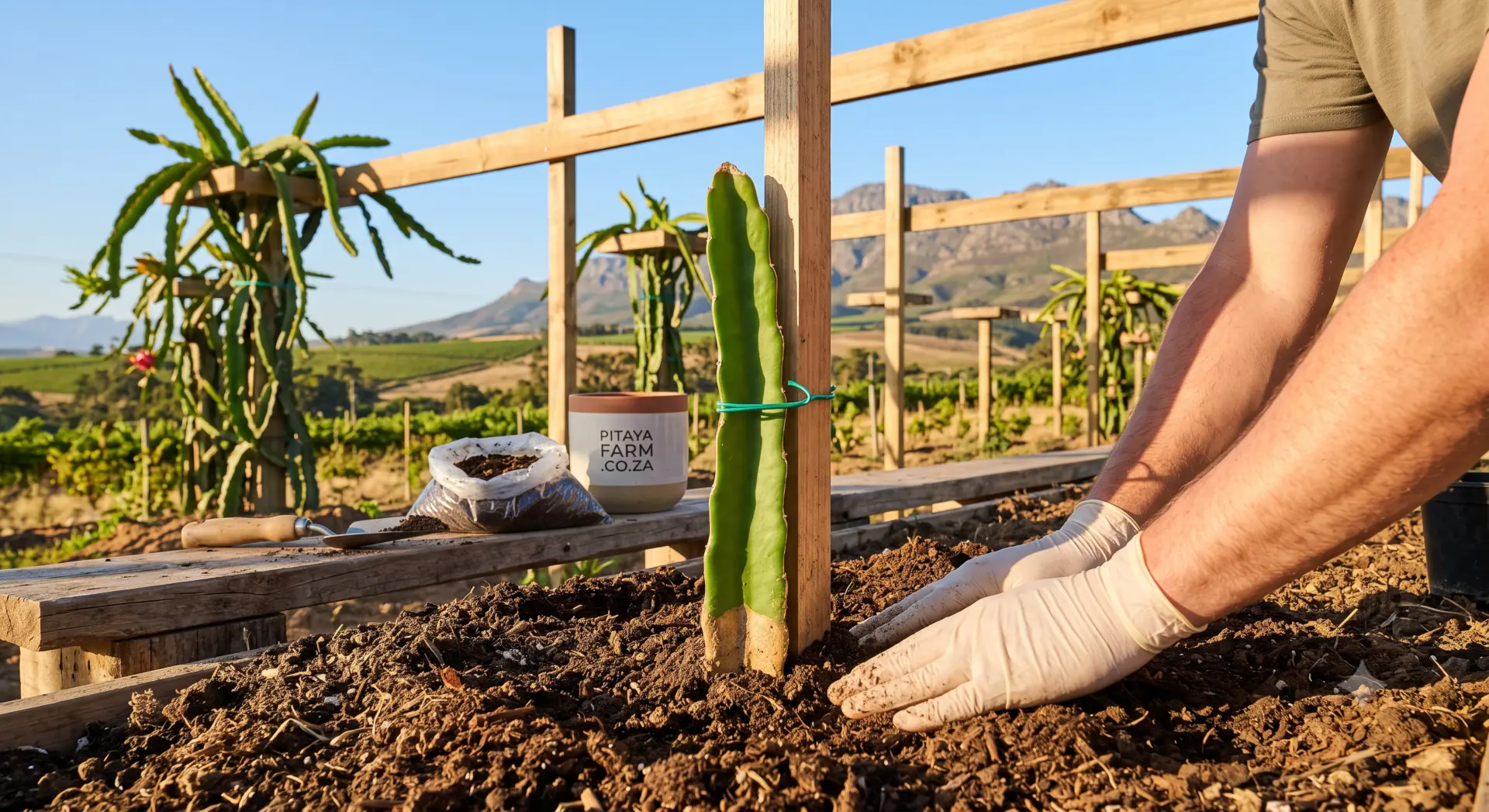
Growing your own dragon fruit (pitaya) at home is one of the most rewarding gardening projects you can undertake. With their striking, night-blooming flowers and vibrant, tropical fruit, these climbing cacti are surprisingly low-maintenance once you get them off to the right start.
If you’re ready to turn a simple cutting into a lush, fruit-bearing vine, here is a simple step-by-step guide to planting and establishing pitaya in your garden.
1. Prepare Your Cutting Correctly
Before a dragon fruit cutting goes into the ground or a pot, it needs a little prep time.
- Curing is Key: If you’ve taken a fresh cutting, let the cut end heal and dry out in a cool, shady spot for 5 to 7 days. This creates a hardened “callus” over the wound, which prevents rot when planted.
- Identify Top from Bottom: Always plant the cutting with the growth direction pointing up (the arrows or spines on the stem should point upward).
2. Soil, Sun, and Support
Pitaya vines are hemiepiphytic cacti—meaning they love sunlight, need excellent drainage, and require something sturdy to climb.
- Sunlight: Choose a location that receives at least 6 hours of full sunlight daily.
- Soil Mix: Heavy, waterlogged soil is the enemy of dragon fruit. Use a sandy, well-draining soil mix enriched with organic compost. If planting in pots, mix equal parts potting soil, coarse sand, and perlite or gravel.
- Support System: Pitaya vines can weigh over 50kg when mature! Set up a sturdy wooden post, heavy-duty trellis, or fence line before you plant so the roots aren’t disturbed later.
3. Planting Your Cutting
Once your cutting has calloused and your spot is ready:
- Dig a shallow hole (about 5 to 8 cm deep)—do not plant too deep, or the base may rot.
- Place the calloused end of the cutting firmly into the soil.
- Loosely tie the stem to your support trellis using soft garden tape or twine to guide its upward growth.
- Water lightly around the base to settle the soil.
4. Early Care: Watering & Feeding
- Watering: Keep the soil slightly moist while roots are establishing (the first 3–4 weeks), but never soggy. Once established, allow the top layer of soil to dry out completely between waterings.
- Fertiliser: During the active growing season (spring and summer), feed your plant monthly with balanced organic compost or a light fruit-and-flower fertiliser to encourage strong growth and future blooms.
What to Expect Next
With good sunlight and proper care, your cutting will start shooting out new green branches within a few weeks. Depending on the variety and local growing conditions, home-grown pitaya vines usually start producing their famous night-blooming flowers and sweet fruit in 1 to 2 years.
Ready to Start Your Dragon Fruit Patch?
Browse our selection of hardy, farm-proven pitaya cuttings and starter plants straight from our orchard at Pitaya Farm!
